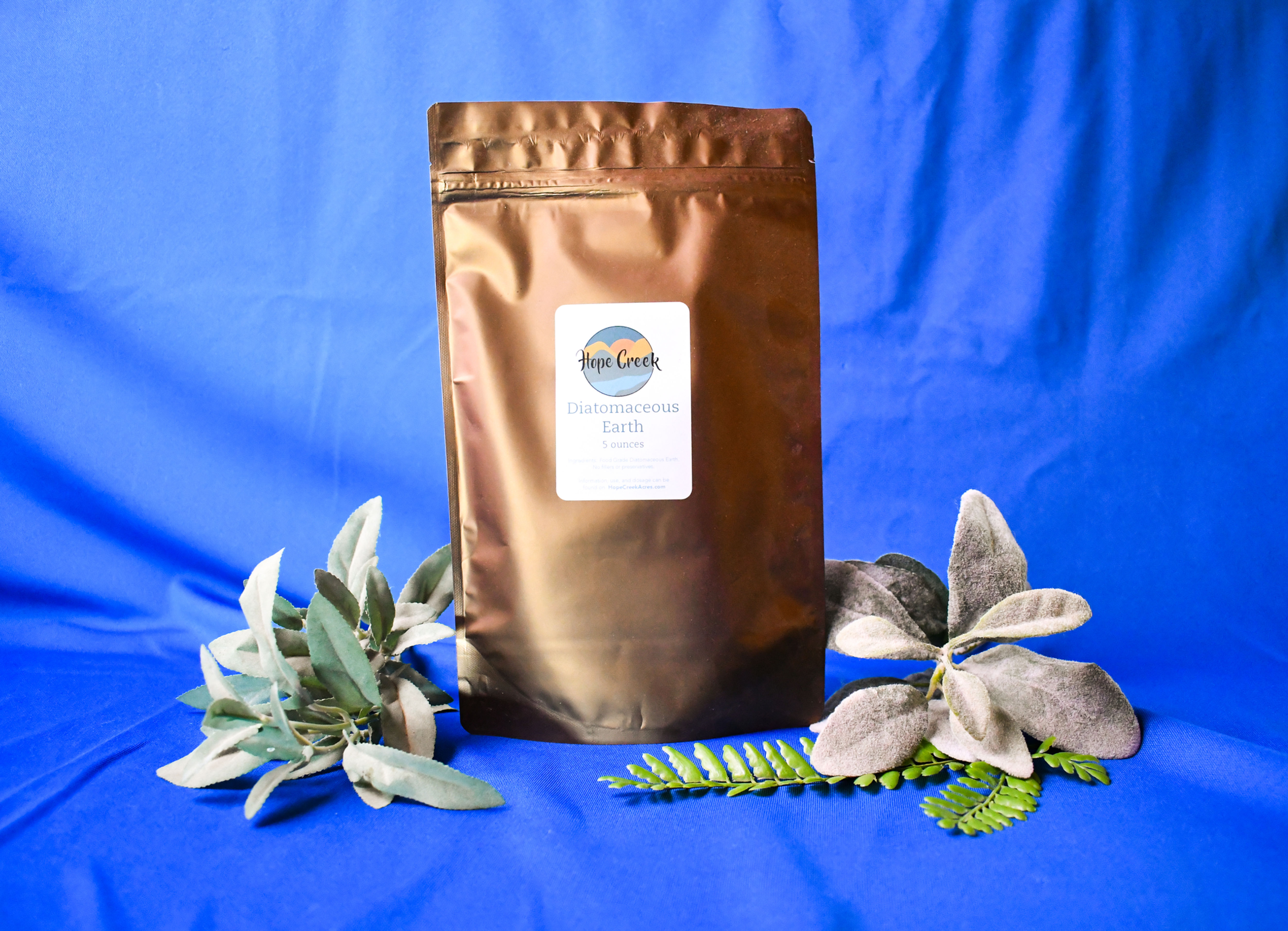

Diatomaceous Earth Powder 5 oz
Diatomaceous Earth (DE) has health benefits for:
• Heavy metal detoxifier. Prevents the body from absorbing aluminum
• Natural colon detoxifier and deodorizer
• Anti-parasitic
• Detoxes bacteris, viruses and candida
• Blood Pressure: can help normalize circulation and regulate blood pressure. Can help arterial disease by strengthening the blood vessels.• Cholesterol
• Osteoperosis
• Weight Loss: stimulates metabolism
• Cosmetics
• Hair, Nails, Teeth & Gums,
• Energy
• Bacteria: DE has a negative charge & bacteria has a positive charge. It is believed that DE sweeps bacteria out of the body by trapping it in its honeycomb shaped skeletal form
• Ear, Nose Throat: The intake of silica acts as a supportive treatment for inflammation of the middle ear. Because of the beneficial effectiveness on the lymphatic system, silica can be used for swelling of
the lymph nodes in the throat. Can decrease vertigo, headache, tinnitus.
• Anti-Aging
• Arthritis: Improves elasticity of the joints, silica helps rheumatism.
• Insomnia
• Urinary Infections and Kidney issues: It is a natural diuretic which can increase excretion of urine by 30 percent, thus flushing the water-excreting system and restoring normal function to these vital organs.
• Headache
• Lung health: Silica supplementation helps repair
& maintain vital lung tissue and protects them from pollution. By maintaining or restoring the elasticity of lung tissue, silica reduces inflammation in bronchitis
• Cough suppresant: Silica tones the upper respiratory tract (nose, pharynx, larynx) and reduces swelling because of its positive action on the lymphatic system. • Menopause
• Digestion: The presence of sufficient silica in the intestines will reduce inflammation of the intestinal tract. Heloing with stomach problems, intestinal mucus & ulcers. Silica can prevent or clear up diarrhea & constipation.
• Diabetes: promoties synthesis of elastase inhibitor by the pancreas.Most people take a teaspoon of DE dissolved in liquid two or three times per day. This quantity should bring your silicon levels up to normal, although you may want
to experiment in the long-term with larger or smaller doses.
Diatomaceous Earth Powder
INGREDIENTS: Food Grade Diatomaceous Earth, no fillers
SUGGESTED USE: Caution: ensure you never inhale
DE. It is especially dangerous to the lungs if it is in
a crystalline form, or if it has been heated to a high temperature. Take precautions not to inhale the dust of the fine white powder. When taking it, stir it into liquid. Do not take it as a dry powder, or sprinkled onto food as a dry powder.